Impact Resistance of Oil casing in Extreme Temperatures
Oil casing serves as a critical component in the petroleum industry, tasked with safeguarding the integrity of oil wells in harsh and demanding environments. Among its many attributes, one of the most crucial is its ability to withstand extreme temperatures and maintain structural integrity under immense pressure. This resilience is not merely a matter of design but a testament to the materials and engineering that go into its construction.
In extreme environments, such as those found deep underground or offshore, where temperatures can soar or plummet dramatically, the oil casing must perform reliably. The primary material used in these casings is typically steel, chosen for its exceptional strength and durability. However, not all steels are created equal when it comes to withstanding temperature extremes.
High-strength alloys are often preferred for oil casing applications due to their ability to maintain toughness and resist deformation even at elevated temperatures. These alloys are meticulously engineered to balance hardness with flexibility, ensuring that the casing can withstand the immense pressures and temperature differentials encountered during oil extraction.
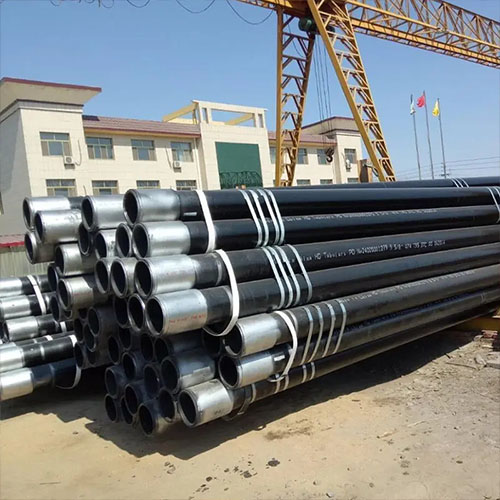
API N80 casing
The toughness of oil casing is particularly evident in its impact resistance. In environments where equipment encounters abrasive forces or sudden shocks, such as during drilling or well Maintenance, the casing must protect the wellbore from damage. The ability of the casing to absorb and dissipate these impacts without compromising its structural integrity is paramount to its effectiveness.
Furthermore, the manufacturing process plays a crucial role in enhancing the casing’s toughness. Advanced techniques such as quenching and tempering are employed to refine the microstructure of the steel, thereby improving its hardness and toughness. These processes not only increase the casing’s resistance to wear and corrosion but also ensure that it can withstand the rigors of extreme temperature fluctuations without brittleness or failure.
In addition to the material and manufacturing considerations, the design of the oil casing itself contributes significantly to its performance in extreme environments. Engineers carefully calculate the dimensions and Wall thickness of the casing to ensure that it can bear the Weight of the surrounding rock formations and the pressures exerted by the Oil and gas reservoirs. Moreover, features such as Threaded connections and protective coatings are incorporated to enhance the casing’s ability to resist corrosion and maintain its integrity over prolonged periods.
The importance of these design considerations becomes even more apparent in offshore drilling operations, where environmental conditions can be exceptionally harsh. Oil casing must withstand not only the corrosive effects of seawater but also the constant movement and stresses imposed by ocean currents and waves. The casing’s ability to endure such conditions without degradation is a testament to its robust construction and the rigorous standards to which it is manufactured.
https://youtube.com/watch?v=W7UwxDk5yUQ
In conclusion, the toughness of oil casing in extreme environments is a result of meticulous engineering, advanced materials, and precise manufacturing processes. From withstanding high temperatures deep underground to enduring the corrosive marine environment offshore, oil casing plays a pivotal role in ensuring the safety and efficiency of oil extraction operations worldwide. As technology continues to advance, so too will the capabilities of oil casing, further enhancing its ability to operate reliably in the most challenging of conditions.
Durability Testing Methods for Oil Casing
In the demanding world of oil exploration and production, the durability of equipment is paramount. Oil casings, in particular, must withstand extreme environments, from corrosive fluids to high-pressure conditions deep underground. Understanding how these casings reveal their toughness through rigorous testing methods is crucial for ensuring operational reliability and safety.
Oil casings are subjected to a series of rigorous durability tests to evaluate their performance under various environmental stresses. These tests simulate real-world conditions to ensure that the casings can withstand the harsh environments they will encounter during their operational lifespan.

One of the primary methods used to test the durability of oil casings is corrosion testing. Corrosion can significantly weaken casings over time, compromising their integrity and safety. In testing labs, casings are exposed to corrosive fluids and gases that mimic the conditions found in oil wells. By monitoring the corrosion rate and examining the material’s response, engineers can determine the casing’s resistance to corrosion and make informed decisions about material selection and design improvements.
Mechanical testing is another essential aspect of durability testing for oil casings. Casings must endure immense pressure and mechanical stress without deforming or fracturing. In the lab, casings are subjected to pressure tests that simulate the forces exerted by fluids and geological formations deep underground. Engineers analyze the casing’s response to these pressures, looking for signs of deformation, cracking, or failure. This information helps them optimize casing design and ensure it meets or exceeds industry standards for strength and durability.
Furthermore, thermal testing plays a critical role in evaluating how oil casings perform in extreme temperature conditions. Oil wells can experience wide temperature fluctuations, from scorching heat to freezing cold. Casings undergo thermal cycling tests where they are exposed to rapid changes in temperature. Engineers monitor how the casing expands and contracts under these conditions to assess its dimensional stability and resistance to thermal fatigue. This data guides the development of casings that can maintain their structural integrity over a wide range of temperatures.
To complement these tests, fatigue testing evaluates the casing’s endurance under repeated loading and unloading cycles. In oil wells, casings are subjected to cyclic stresses as fluids are pumped in and out. Fatigue tests simulate these conditions by applying repeated mechanical loads to the casing and monitoring its fatigue life. This helps engineers predict when the casing may fail due to fatigue and implement preventive measures such as material enhancements or design modifications.
In addition to laboratory testing, field trials are conducted to validate the performance of oil casings in real-world conditions. Casings are installed in test wells where they are exposed to actual drilling, production, and environmental factors. Engineers monitor the casings’ performance over an extended period, collecting data on corrosion rates, mechanical integrity, and overall durability. Field trials provide valuable insights into how casings perform in situ and inform ongoing improvements in design and manufacturing processes.
Overall, the durability of oil casings in extreme environments is ensured through a comprehensive approach to testing and evaluation. By subjecting casings to corrosion, mechanical, thermal, and fatigue tests, engineers can identify potential weaknesses and refine their designs to enhance durability and reliability. These rigorous testing methods are essential for safeguarding the integrity of oil wells and ensuring the safety of personnel and the environment. As oil exploration ventures into increasingly challenging environments, the importance of robust and resilient Oil casing materials and designs continues to grow, driven by advances in testing technology and a commitment to continuous improvement in industry standards.