Understanding J55 Pipe: Its composition, Uses, and manufacturing process
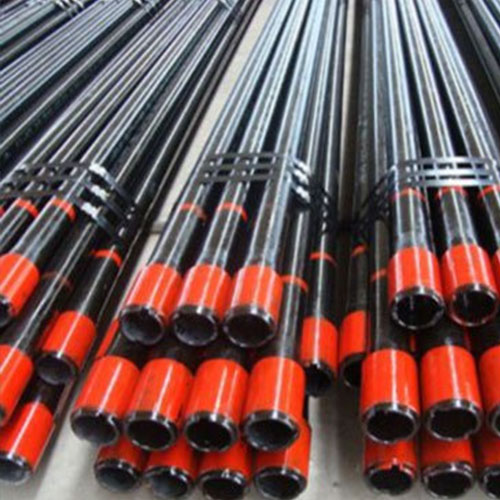
The J55 pipe series is a crucial part of the petroleum and natural gas industries. Although it may simply appear as a system of tubes, understanding its composition, uses, and manufacturing process reveals its underlying sophistication, highlighting why it is fundamental to the workings of such critical industries.
First and foremost, J55 is specifically a grade designation of the American Petroleum Institute ( API) 5CT standard for casing and Tubing pipes. This means that they are categorized and identified as per certain industry classifications and specifications. Composed primarily of steel, J55 pipes have resilient physical and mechanical properties. They possess a substantial amount of manganese content, enhancing ductility, and they also contain a controlled quantity of sulfur and phosphorus, bolstering machinability. The grade name ‘J55’ indicates its minimum tensile strength is 55,000 psi, further testifying its toughness.
The design of the J55 pipe is tapered towards the ends, a characteristic that facilitates ease of installation in Oil wells. They can be installed vertically or on a slant for oil drilling purposes, showcasing their versatile applications. superior resistance to corrosion and heat makes J55 pipes ideal for transporting oil and natural gas. Their strength and resilience under harsh environmental conditions add to their longevity and durability in the industry.
https://youtube.com/watch?v=pE2PEEU66NM
The manufacturing process of J55 pipes begins with precisely controlled steel-making processes to ensure the required amounts of manganese, sulfur, and phosphorus. The steel is then molded, typically through a hot-rolling process, into the desired pipe shape. Afterwards, these pipes are heat treated, typically via normalizing or quenching and tempering, to attain the necessary hardness and strength. Each manufacturing step is stringently monitored to meet the api 5ct standard, guaranteeing quality and performance with each pipe produced.
Post-manufacturing, there are series of tests done on the pipes like flattening test, tensile test, drift test, Hydrostatic test, to name a few, to ensure it fulfills the industry grade designation. A successful go-ahead in these tests labels them ready to be dispatched for their numerous applications.

In summary, the J55 pipe serves as a silent but significant contributor to the sturdy infrastructure of the petroleum and natural gas industry. Its robust composition, versatile uses, and intricate manufacturing process combine to create a product justifiably relied upon for safe and effective movement of vital resources. If we perceive the oil industry as a vast, complex machine, the J55 pipe forms a cog in it, ensuring the smooth, uninterrupted flow of materials, culminating in our everyday energy supply. Thus, understanding what a J55 pipe is beckons an appreciation for its role in powering our world.
api 5ct L80-1 CASING Chinese best Suppliers